If you opt for baseboard radiators or a radiant floor system, you need a boiler to heat the fluid. The debate between natural gas and electric boilers hinges on local utility rates, infrastructure availability, and your long-term efficiency goals.
Modulating Condensing Gas Boilers
Modern gas boilers have evolved far beyond the cast-iron behemoths of the past. "Mod-con" boilers extract latent heat from the exhaust gases, achieving AFUE ratings of 95% or higher. They modulate their burner output precisely to match the heating demand, sipping gas rather than guzzling it.
"The condensing boiler fundamentally altered hydronic heating, turning waste exhaust heat into usable ambient warmth."
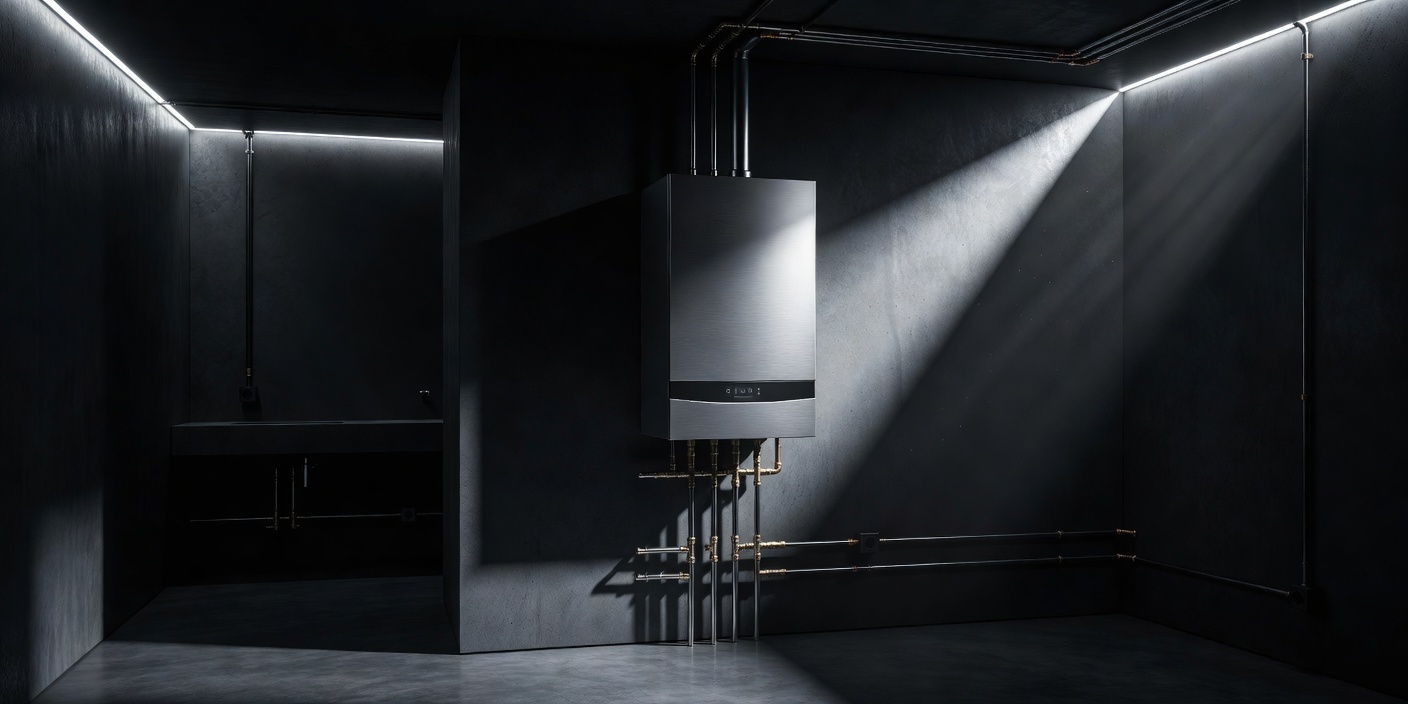
Electric Boilers
Electric boilers boast near 100% efficiency—meaning all electricity consumed is converted to heat without exhaust loss. They are completely silent, require zero venting, and have minimal maintenance needs. However, the operational cost is directly tied to your local cost per kWh, which in many regions makes them significantly more expensive to run than gas, unless paired with robust solar infrastructure.
Gas Pros
Lower operational costs in most regions, high BTU output for large homes.
Electric Pros
No carbon monoxide risk, zero venting required, completely silent operation.