Radiant heating changes the paradigm of comfort. Instead of blowing hot air into a room—which immediately rises to the ceiling and cools—radiant systems heat the floor itself. This heat then slowly emanates upward, warming people and solid objects directly through infrared radiation.
Hydronic vs. Electric
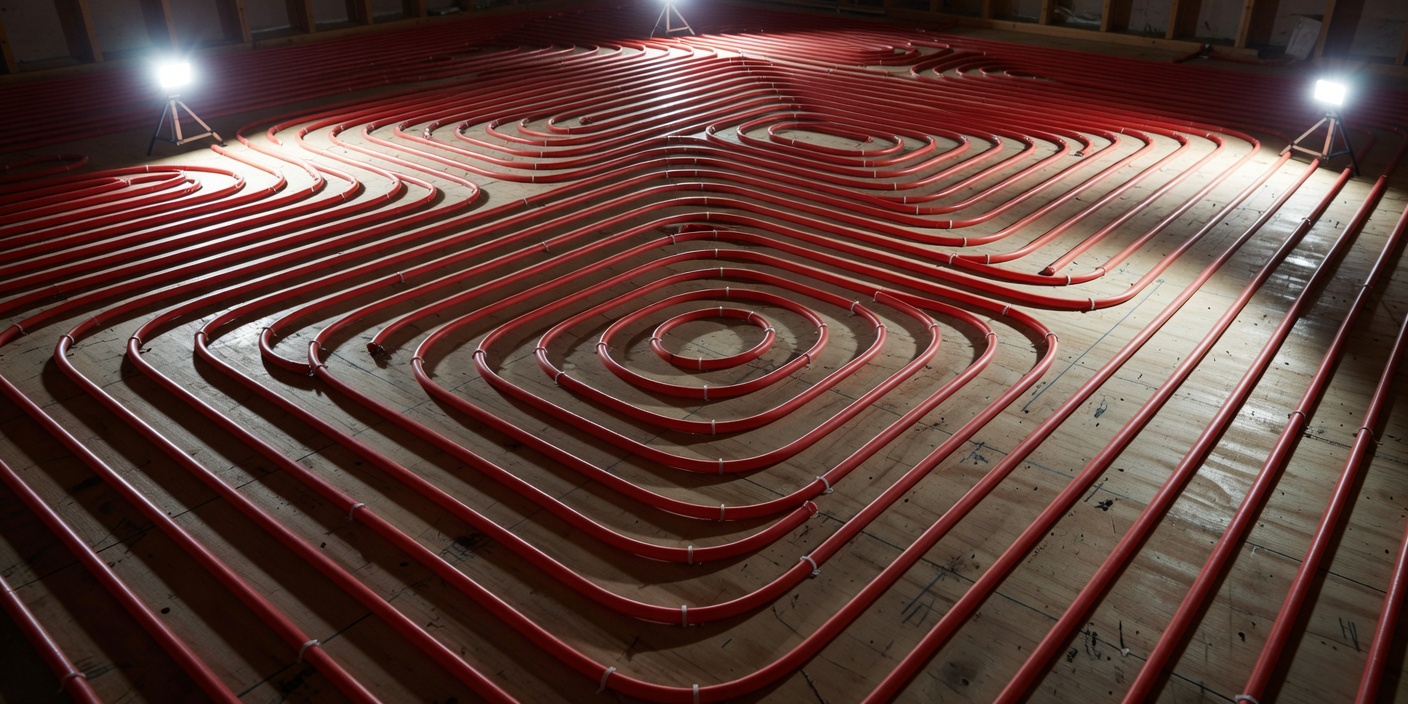
Electric radiant mats are typically reserved for small areas like bathrooms due to operational costs. Whole-home systems utilize hydronic tubing. A boiler or specialized heat pump circulates warm water through PEX tubing embedded in a concrete slab or beneath the subfloor.
"Because radiant heat doesn't rely on moving air, there are no drafts, no airborne dust, and the thermostat can often be set several degrees lower while maintaining superior comfort."
The Role of Thermal Mass
Materials like concrete, tile, and stone are highly conductive and have excellent thermal mass. They absorb the heat from the water tubes and release it slowly over hours. This creates an incredibly stable atmospheric environment, immune to the rapid temperature swings associated with forced air cycling on and off.